What is the Cosmic Perspective?
Updated: Oct 13, 2022

There is no greater philosophical disparity than that which exists between our human obsession with the incessant minutiae and stress of our day-to-day working lives and the reality of the grand, awe-inspiring and multitudinous cosmos, full of possibilities and wonder. How tragic that our daily struggles force our focus inwards, on the many trials of life, such that we often forget to gaze outwards to that vast cosmos from which we come.
But we haven’t forgotten entirely, some part of us still longs for this cosmic connection. How many myths, both recent and ancient, seek to connect us to the cosmos in some deep and mysterious way; in religions by anthropomorphising the planets into gods; in astrology by associating terrestrial events to the motions of planets through the constellations dreamed by our ancestors, the constellations themselves all being familiar objects with Earthly stories, written in the stars. One need only look at the numerous different interpretations of the star Betelgeuse as an example of humanity's desperation to find meaning in the sky (see figure below).

The Earth is our home, but we clearly crave more meaning than it can give us, we crave a cosmic significance, a reason for our existence. But alas it seems there is none, no purpose apart from that which we make ourselves. It doesn't appear that the universe planned humans any more than it planned Jupiter’s Great Red Spot. The laws of nature set forth the rules and circumstances for these events to occur and so... they did. The atoms in our bodies however have had a very cosmic journey to arrive where they have today. Starting out as only hydrogen, helium and a touch of lithium, the universe lacked the essential building blocks for planets and life. That was of course, until gravity gave things a bit of a push along (or a pull) and began coalescing matter to form the first stars. Now if you ever feel like you've wasted a day, or a few months, or even a few years of your life, just remember that the universe took 180 million years before it even started making those first stars, sometimes it takes time for great things to happen. Our essence was forged in those cosmic furnaces, deep inside the hearts of these stars, over billions of years of nuclear fusion, before eventually being spread out in supernova explosions that enriched the universe with the heavy elements required for us to be. So we do somewhat have that cosmic connection that we crave so much. But just coming from the stars is not enough, we long to return, to complete that cosmic pilgrimage home.
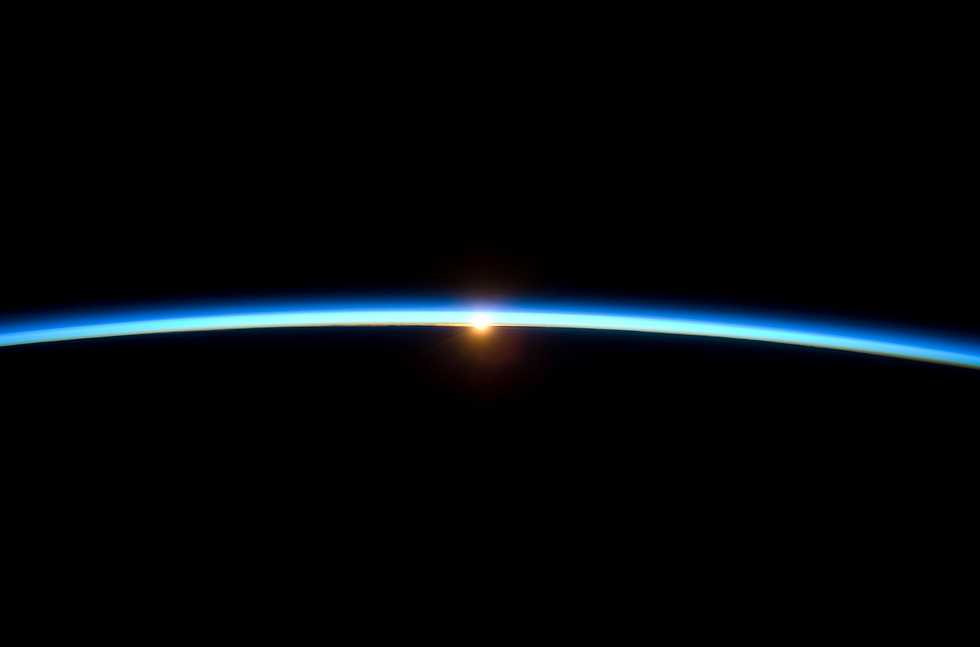
If we fast-forward far enough into the future, our options are laid bare, spread out and voyage into the unknown or stay put here on Earth and eventually perish. We must understand that the Earth, while it has played an extremely special role in our story, is not a permanent home. Just as the oceans were only a temporary habitat until our amphibian ancestors colonised the land, so too planet Earth is now the shore from which we must begin our next journey, into that of the cosmic ocean.
In this next chapter of our story, the hazards and perils facing us are innumerable, both natural and self-created. We see ourselves as the masters of planet Earth based on our choice to view our success as a species on the basis of the quality of life enjoyed by a small cross-section of the global population. Now at the current pinnacle of technological advancement our success has been left largely unchecked, the majority of immediate threats to our survival seem mostly self-created. If we wish to conquer these hurdles, together as one species and take on the future challenges awaiting us off-planet, humanity requires a new way of thinking, not an individual or a national perspective and not even a global one, but a cosmic perspective, one that views ourselves not as beings with dominion over nature, but as beings with a responsibility, that we owe to ourselves and to the rest of the cosmos, the unbounded, ambivalent, void-like desert which harbours our oasis planet.
There are those that might critique such a perspective and claim that this broad outlook diminishes the focus on more important things closer to home. However, the cosmic perspective involves more than just gazing aimlessly outwards. Because the further out we look, the more it tends to stir our own inner reflections; we compare exotic celestial environments to our own planet and marvel at the similarities shared by worlds with such different fates. The cosmic perspective covers magnitudes of both distance and time and in doing so gives us an appreciation of just how incredibly rare our story is. The significance of the diversity of life on Earth, framed by the insignificance of our place in the cosmos is at the heart of this cosmic perspective; for even though the peak of a mountain constitutes but a tiny fraction of the mountain itself, it still holds a special level of significance for the view it provides. Similarly, our planet Earth comprises of very little on an astronomical scale, being just one of trillions of planets, but it is the only place we know of in the whole universe that allows a multitude of wonders to be seen in every direction, whether we are looking out towards the rest of the cosmos or back at our own unique world that is teeming with life, a rich, extraordinary history and a future potential of almost infinite possibilities.
For the perfect introduction to the cosmic perspective, check out the 1980's documentary Cosmos: A Personal Voyage by Carl Sagan, available in full on Vimeo (Link). See NASA's tribute to Carl Sagan's cosmic perspective in The Sagan Series (Link) ep.1 is shown below.

Comments